
125: The Unity Principle: Why "Not For Everyone" Outperforms "For Everyone"
Framework Sunday: Cialdini's most underused persuasion principle — and how to apply it to your creative this week.
125: The Unity Principle: Why "Not For Everyone" Outperforms "For Everyone"
Framework Sunday: Cialdini's most underused persuasion principle — and how to apply it to your creative this week.

Chase Mohseni
February 15, 2026

Framework Sunday: Cialdini's most underused persuasion principle — and how to apply it to your creative this week.
Hey everyone, Chase here.
Quick one today. New format I'm trying — a single framework you can actually use this week.
Today: The Unity Principle.
It's the 7th (and least talked about) of Robert Cialdini's principles of persuasion. And it might be the most powerful one for creative.
The problem.
Most brands try to appeal to everyone.
"Our product is for anyone who wants better skin / more energy / a cleaner home."
This feels safe. Wider audience = more customers, right?
Wrong.
When you speak to everyone, you speak to no one. Your creative becomes wallpaper. Your audience scrolls past because nothing signals this is for me specifically.
The Unity Principle fixes this by doing the opposite — it creates an in-group that your ideal customer wants to belong to.
The framework.
Cialdini's Unity Principle says: People say yes to those they consider "one of us."
Not people they like (that's a different principle). People they identify with. People who share their tribe, their values, their enemies.
Unity is activated when your audience thinks:
"These people are like me. They get it. I belong here."
Three ways to trigger Unity in creative:
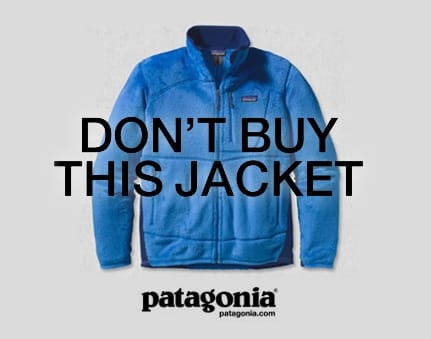
1. Define who you're NOT for.
Exclusion creates inclusion. When you say "this isn't for everyone," the people it IS for lean in harder.
Liquid Death doesn't sell water. They sell membership in a tribe of people who think wellness culture is cringe. "Murder Your Thirst" excludes the Whole Foods crowd — and that exclusion is the product.
2. Name the shared enemy.
Nothing unifies a group faster than a common enemy. The enemy doesn't have to be a competitor — it can be a frustration, a broken system, or a way of doing things.
Dyson's enemy was the vacuum bag industry. Apple's enemy was "the beige box." Basecamp's enemy is workplace complexity.
Your audience should see the enemy and think: "Finally, someone who gets why this pisses me off."
3. Use insider language.
Speak in terms only your audience would understand. Jargon, references, and shorthand signal tribal membership.
When we write "if you've spent more than 15 minutes on the internet, you see something else" (like in last week's Instant Hydration breakdown) — that's insider language. You either get it or you don't. And if you get it, you're in.
Application: Liquid Death's entire brand.
Liquid Death is the masterclass in Unity.
The product is water. Literally just water.
But the creative says:
"Death to Plastic" (shared enemy: environmental destruction, but make it metal)
"Murder Your Thirst" (language that excludes the yoga-and-green-juice crowd)
Tallboy cans that look like beer (visual tribalism — you look like you're drinking at a show, not hydrating)
"Not for everyone" (explicit exclusion)
The people who love Liquid Death don't just like the product. They identify with the brand. They're part of the joke. They're in on it.
That's Unity.
Every week I break down what makes ads & creative work.
CreativeOS is where you go to actually build them.
10,000+ templates. AI that learns your taste. A creative engine that gets smarter every time you use it.
It's the platform behind the newsletter.
Try it this week.
Take your best-performing ad and rewrite the hook using Unity:
Step 1: Define who your product is NOT for. Write it down. Be specific. ("This isn't for people who want the cheapest option." / "This isn't for beginners." / "This isn't for brands who think creative is a cost center.")
Step 2: Name the shared enemy. What frustrates your best customers? What broken system are they fighting against? What do they complain about?
Step 3: Rewrite the first line of your ad as an insider statement. Something that makes your target audience think "they get it" — and makes everyone else feel slightly excluded.
Then test it against your control.
Example: Cards Against Humanity Packaging

Explicit exclusion as the tagline. Product box image is everywhere and the line itself is the visual.
That's Unity.
The next time you're tempted to broaden your targeting and soften your message, remember:
The brands that win aren't for everyone.
They're for someone — and that someone knows it immediately.
Until next time,
Chase
Want to go deeper on persuasion psychology in creative? Reply and tell me which Cialdini principle you want next — Social Proof, Scarcity, Authority, Reciprocity, Commitment, or Liking.