
142: How Adidas Made the Podium the Only Ad That Mattered (Part 2)
A Creative History on Adidas - Part One
142: How Adidas Made the Podium the Only Ad That Mattered (Part 2)
A Creative History on Adidas - Part One

Chase Mohseni
March 26, 2026

Three stripes, a home Olympics, and the athlete seeding strategy that Nike would later steal.
Hey everyone, Chase here from CreativeOS.
Last week I told you how Adi Dassler built shoes in his mother's laundry room, put them on Jesse Owens at the Nazi Olympics, and then watched his family tear itself apart.
By 1949, Adidas existed. The thesis was proven: win on the podium, win in the market.
But Adi had a new problem. His shoes were on champions. People knew his name. But from fifty feet away in a stadium, nobody could tell an Adidas shoe from any other brand.
This is the story of how three stripes fixed that — and how a home Olympics turned Adidas into the most dominant force in sports.
In this issue, you'll learn:
Why Adi Dassler bought a trademark from a Finnish company for a symbol that had nothing to do with performance
The "pyramid" system that got Adidas on 80% of athletes at the 1972 Munich Olympics
How the three stripes became more valuable than any advertisement
The problem with winning.
After the 1948 London Olympics, Adidas-equipped athletes had won medals in track and field, soccer, and multiple other sports.
The strategy was working. But Adi noticed a problem.
When you watched the Games on television — or saw a photograph in the newspaper — you couldn't tell what shoes the athletes were wearing. From any distance, they all looked the same.
The wins were invisible.
Adi needed a mark. Something you could see from the stands. Something that would show up in photographs. Something that made every winner into a walking billboard.
In 1949, he found it.
A Finnish sports brand called Karhu had been using three parallel stripes on their shoes. They owned the trademark.
Adi bought it from them for the equivalent of $1,600 and two bottles of whiskey.
It might be the best deal in branding history.
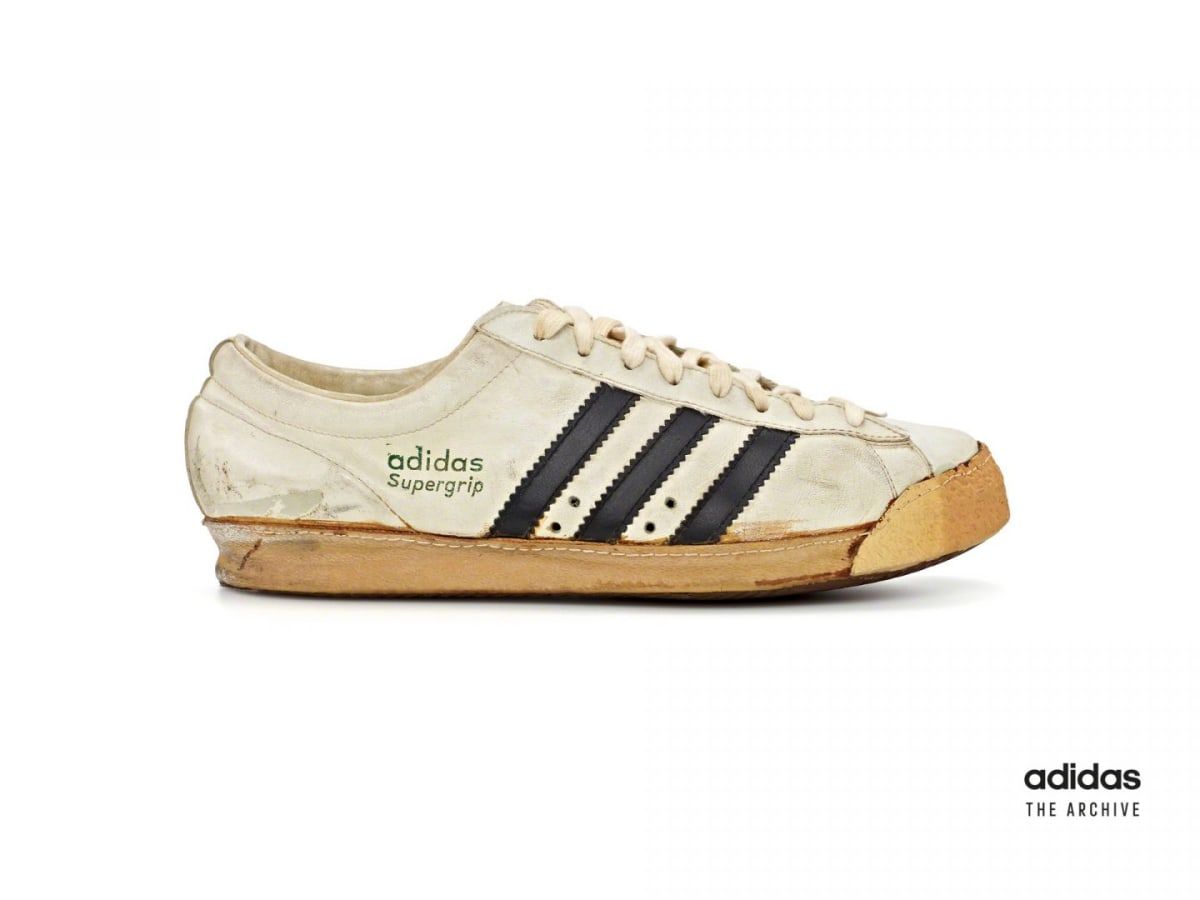
The three stripes weren't about style.
Here's what people get wrong about the three stripes.
They weren't a design choice. They weren't about aesthetics or fashion.
They were a visibility system.
Three diagonal stripes running up the side of a shoe are visible from 100 meters away. They show up in grainy newspaper photographs. They're recognizable on a fuzzy television broadcast.
Adi added them to every product. Running shoes. Soccer cleats. Boxing boots. The stripes were always in the same position, always the same angle.
Within a decade, the three stripes didn't mean "Adidas." They meant "winner."
When you saw those stripes on the medal stand, you didn't need to read a logo. The mark did the work.
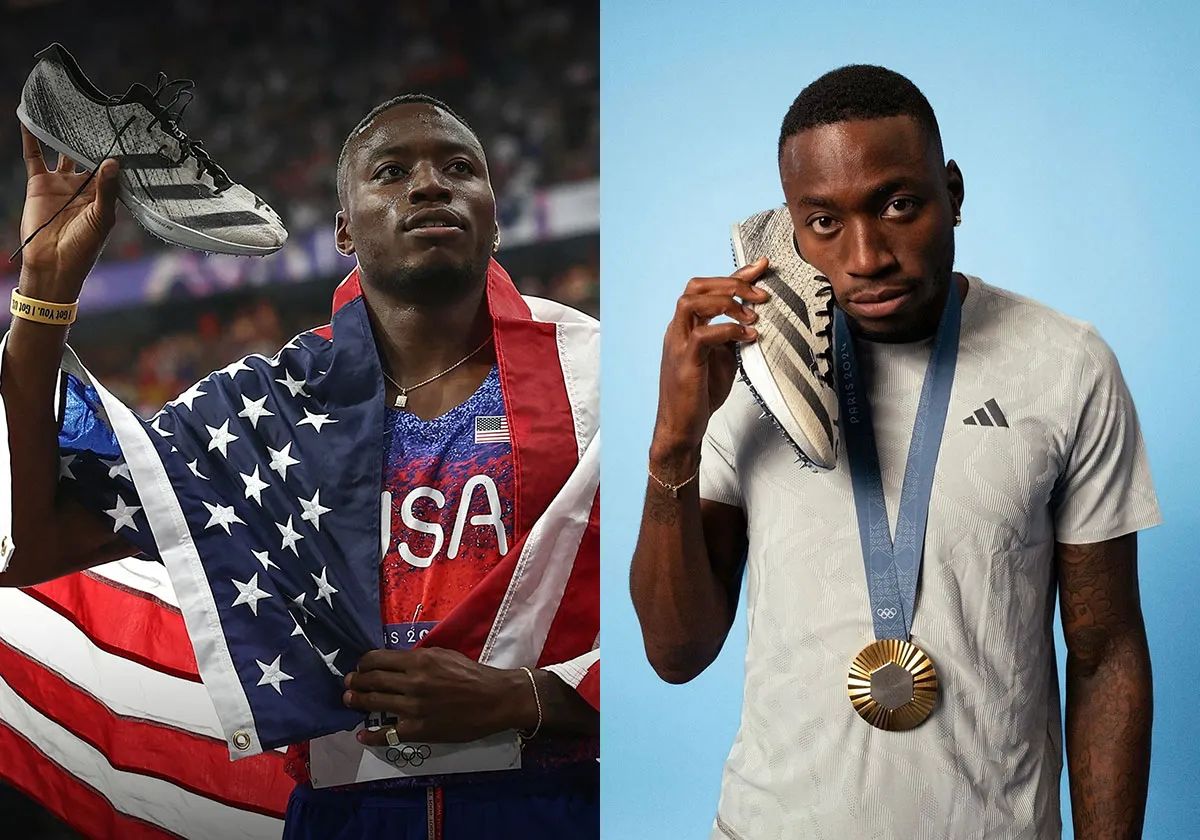
The pyramid seeding system.
By the 1960s, Adi Dassler had formalized his approach into something the company called the "pyramid" system.
At the top: elite athletes. Gold medalists. World record holders. These athletes got free custom equipment, personal attention from Adi himself, and — eventually — cash payments for wearing the brand.
In the middle: national team athletes and promising amateurs. They got free shoes and equipment.
At the base: youth athletes, local clubs, and school teams. They got discounted products and Adidas presence at their events.
The logic was simple: athletic talent flows upward. Today's youth club player is tomorrow's national team member. Today's national team member is tomorrow's Olympic champion.
If you could lock in athletes early, you owned the pipeline.
Every competitor was playing catchup — signing established stars after they'd already won. Adidas was signing them before anyone else knew their names.
Every week I break down what makes ads & creative work.
CreativeOS is where you go to actually build them.
20,000+ templates. AI that learns your taste. A creative engine that gets smarter every time you use it. Don’t start from scratch - your taste can now scale.
It's the platform behind the newsletter.
Try CreativeOS free → — use code CREATIVEDISCIPLINE for 25% off your first month.
Munich, 1972.
In 1972, the Olympics came to Munich. Germany was hosting for the first time since 1936.
For Adidas, this was home turf. Adi Dassler wasn't just going to sponsor some athletes.
He was going to own the Games.
The numbers are staggering: over 80% of all athletes at the Munich Olympics wore Adidas equipment.
Track and field. Soccer. Boxing. Handball. Volleyball. Swimming. Wrestling.
Adidas was everywhere.
The three stripes were in every photograph. Every broadcast. Every medal ceremony. The company didn't buy a single television ad. They didn't need to.
The Games were the ad.

Mark Spitz won seven gold medals in swimming — an all-time record — wearing Adidas. The entire West German national soccer team wore Adidas. Even athletes from Soviet Bloc countries, who weren't supposed to have Western sponsors, found ways to wear the three stripes.
By the end of the Munich Games, Adidas wasn't just the leading sports brand in Europe.
It was the leading sports brand in the world.
Proof beats persuasion.
Here's what Adi Dassler understood that traditional advertisers didn't:
A champion wearing your product is worth more than any advertisement telling people your product is good.
Think about what an ad does: it makes a claim. "Our shoes are faster." "Our gear is better." The customer has to trust the claim.
Think about what the podium does: it provides proof. The athlete already won. The shoes already performed. There's nothing to trust — there's evidence.
Adi never advertised features. He never ran comparison ads. He never talked about technology or materials in consumer-facing marketing.
He just put his shoes on winners and let the results do the talking.
"If you have a good product, the athlete is the best advertisement," he said.
Every competitor who tried to out-advertise Adidas failed. You can't out-talk proof.

Adidas's Creative Playbook
From a laundry room to 80% market share at the Olympics — without traditional advertising.
Here's what Adidas teaches us about creative discipline:
Make your mark visible. The three stripes weren't decoration. They were a visibility system designed to show up in photographs and broadcasts. Your brand needs distinctive assets that communicate before words do.
Own the pipeline. Adidas didn't chase established stars. They signed promising athletes early and rode them to the top. Invest in talent before your competitors realize it's valuable.
Proof beats persuasion. An athlete winning in your shoes is worth more than any claim about your shoes. The podium doesn't make an argument — it provides evidence.
Let the stage do the work. Adi didn't buy ads at the Olympics. He made the Olympics into his ad by equipping 80% of athletes. Find the stage where your audience is already paying attention.
Trade up the chain. Youth athletes become amateur athletes become professionals become champions. If you own the base of the pyramid, you eventually own the top.
The lesson for the rest of us
Adi Dassler died in 1978, one year after handing control of the company to his son Horst.
He never saw Nike overtake Adidas. He never saw the Michael Jordan endorsement deal that would change sports marketing forever.
But Nike's playbook? It was Adi's playbook.
Athlete seeding. Distinctive marks. Letting performance do the persuading. Phil Knight and Nike didn't invent athlete marketing — they studied Adidas and executed it better in the American market.
The three stripes are still on billions of products. The company is still worth over $40 billion.
And it all started with a cobbler in a laundry room who understood one thing:
You don't need to tell people you're the best. You need to show them.
Keep Creating,
Chase
P.S. — Sign up for our events calendar so you can get access to all the experts we work with helping you build your creative intelligence in real time.